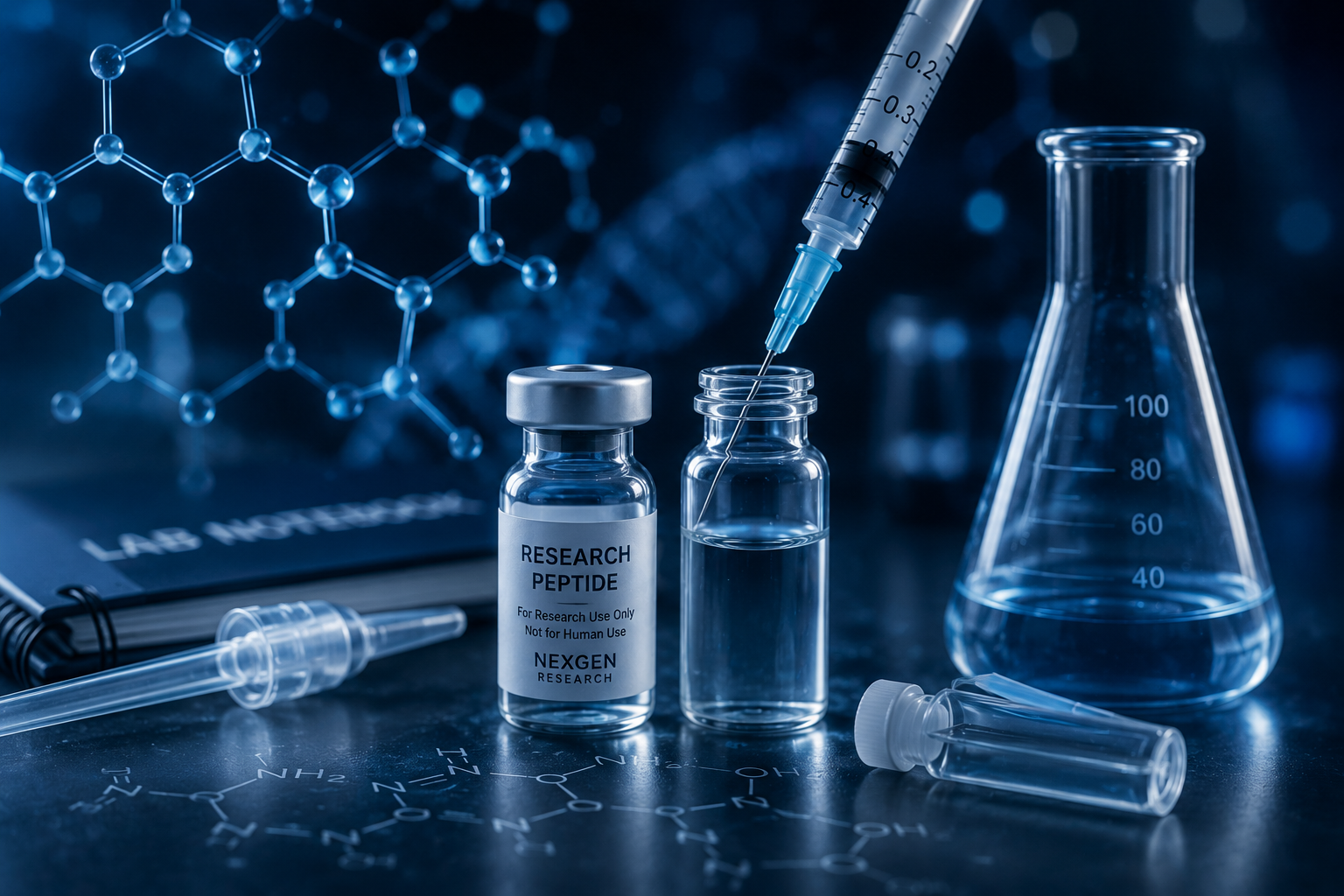
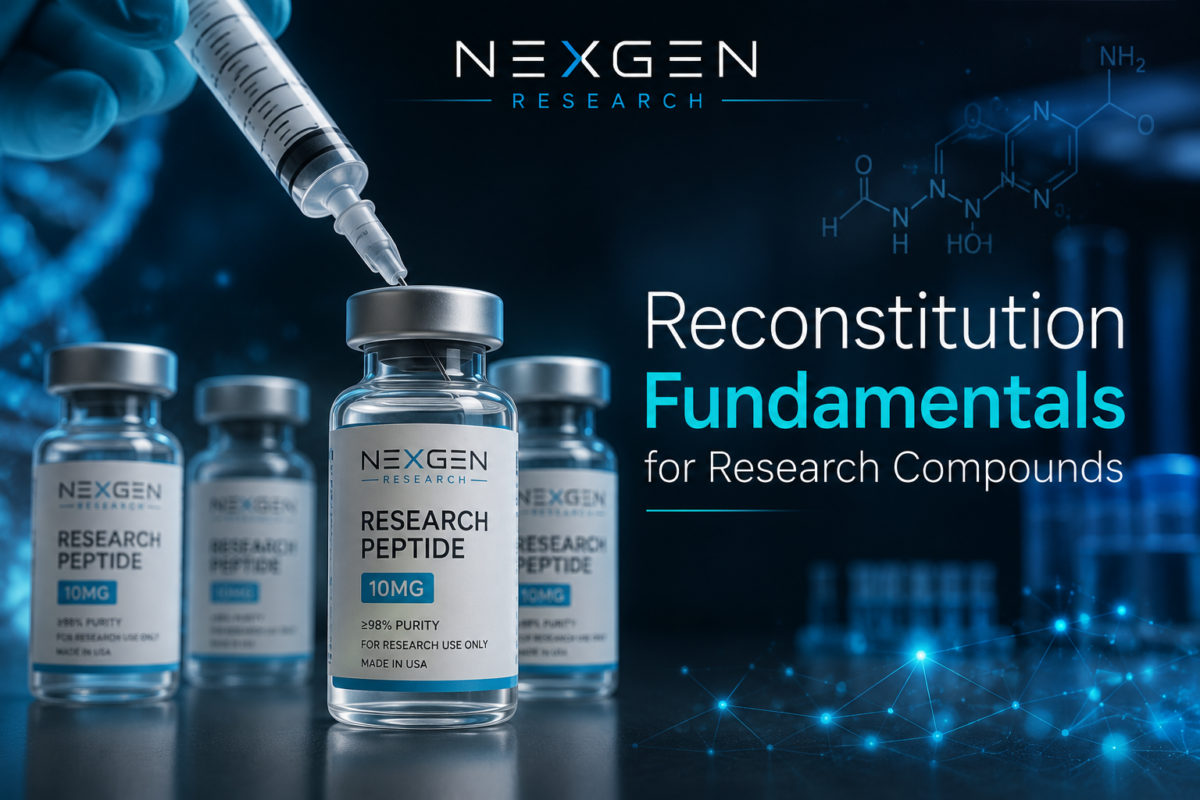
Reconstitution is the process of dissolving a lyophilised peptide powder in an appropriate solvent to produce a usable solution for research applications. While the process may appear straightforward, incorrect reconstitution technique is one of the most common causes of peptide degradation, aggregation, and inaccurate concentration in laboratory settings. This guide covers the fundamentals of correct reconstitution practice for research-grade lyophilised peptides.
Equipment required
Before beginning reconstitution, ensure you have the following available: the sealed peptide vial at room temperature, bacteriostatic water (BAC water) or an alternative appropriate solvent, a sterile insulin syringe or reconstitution needle, alcohol swabs, appropriate personal protective equipment including gloves and eye protection, and a clean laboratory environment.
Choosing the right solvent
The appropriate reconstitution solvent depends on the specific peptide being reconstituted. Bacteriostatic water (sterile water containing 0.9 percent benzyl alcohol) is the most commonly used solvent for research peptides and is suitable for the majority of lyophilised compounds. The benzyl alcohol acts as a preservative, extending the usable life of the reconstituted solution.
For certain peptides with poor water solubility, a small quantity of dilute acetic acid (typically 0.1 percent) or DMSO may be used to assist initial dissolution before dilution with BAC water. Always consult the specific product’s reconstitution guide before proceeding, as using an inappropriate solvent can cause irreversible aggregation.
Step-by-step reconstitution protocol
Allow the sealed vial to reach room temperature before opening. This minimises condensation and reduces the risk of moisture ingress during the reconstitution process. Cold peptide powder contacted with warm solvent can cause localised aggregation.
Clean the rubber stopper of both the peptide vial and the BAC water vial with a fresh alcohol swab and allow to dry for 30 seconds. This step is essential for maintaining sterility throughout the process.
Draw the required volume of solvent into the syringe. The volume used determines the final concentration of the solution. For a 5mg vial, common approaches include adding 1ml of solvent to produce a 5mg/ml solution, or 2ml to produce a 2.5mg/ml solution, depending on the concentration required for your specific research protocol.
Insert the needle through the rubber stopper of the peptide vial at an angle and direct the flow of solvent slowly down the inside wall of the vial rather than directly onto the peptide powder. Forceful injection directly onto the powder can cause mechanical disruption of the peptide structure.
Once the solvent has been added, gently swirl the vial in a slow circular motion until the powder is completely dissolved. The resulting solution should be clear with no visible particulates. Do not shake the vial vigorously as this can cause foaming and peptide degradation through mechanical shear.
Inspect the solution visually before proceeding. If the solution remains cloudy or contains visible particulates after gentle swirling, do not proceed. Cloudy solutions may indicate aggregation, incompatible solvent selection, or a compound integrity issue.
Calculating concentration and volume
Accurate concentration calculation is essential for reproducible research. The basic formula is straightforward: concentration equals mass divided by volume. For a 5mg peptide dissolved in 1ml of solvent, the resulting concentration is 5mg/ml or 5000mcg/ml. For research applications requiring smaller working concentrations, further dilution with an appropriate buffer may be required.
Storage of reconstituted peptides
Once reconstituted, peptide solutions should be stored at 2 to 8 degrees Celsius in a refrigerator. Do not freeze reconstituted solutions unless the specific product guide indicates this is appropriate, as freeze-thaw cycles can cause aggregation and degradation. Label each vial with the reconstitution date, solvent used, and final concentration. Most reconstituted peptide solutions should be used within 28 days of reconstitution.
Minimise the number of times the vial stopper is penetrated with a needle to reduce contamination risk. Where multiple aliquots are required, consider drawing the full reconstituted volume into individual syringes at the point of reconstitution.